
Research & Technology
Three active development programs, one goal: better vector control with a lighter environmental footprint.
Attractant-Based Fly Control Systems
Filth flies are more than a nuisance — they mechanically transmit pathogens between waste sites and human environments, and they impose real costs on livestock operations and food facilities. Conventional control leans heavily on broadcast application, which brings collateral impact and resistance pressure.
Our program develops novel attractant-based systems that concentrate control at the point of attraction rather than blanketing an area. The approach is designed to draw target fly species away from protected zones and suppress local populations with minimal off-target effect. Development is ongoing through iterative field trials in agricultural and residential settings.
Mosquito Auto-Dissemination Technology
The hardest mosquito breeding sites are the ones you can't find — the neglected container, the clogged gutter, the hidden pocket of standing water. Conventional larviciding depends on locating and treating each site directly, which is labor-intensive and always incomplete.
Auto-dissemination flips the problem: it uses the mosquito's own biology and behavior as the delivery mechanism, letting each contact with a treated station carry control agent onward to the cryptic breeding sites that inspectors can't reach. Our program focuses on device design and deployment strategies that make this approach practical at the scale of districts and communities.
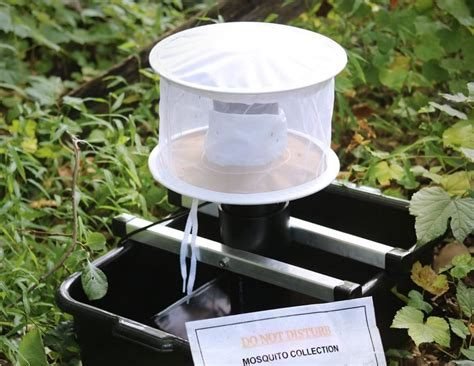
AI-Assisted Field Monitoring
Every claim in vector control lives or dies on efficacy data — and gathering that data has traditionally meant labor-heavy trap counts and manual identification. That bottleneck limits how fast new technologies can be tested and iterated.
We're building AI-assisted monitoring tools that automate field data collection for our own trials: continuous measurement instead of periodic sampling, faster iteration on device design, and the kind of rigorous, reviewable evidence that regulators, research partners, and funding agencies require.
Where We Are
All three programs are in active development. We are pursuing research funding and partnerships to accelerate the work and welcome conversations with university researchers, public health agencies, and abatement districts interested in trial collaboration. Specific technical details, formulations, and mechanisms are shared under agreement with qualified partners — reach out to start that conversation.
Interested in Collaborating?
We partner with researchers and agencies on field trials and evaluation studies.
Grants & Partnerships